 The recent bad weather in the Kansas City area, not to mention the extreme and unprecedented weather everywhere, serve to remind us to have a weather plan in place, not just for our homes and our families, but a farm disaster plan as well.
Severe weather throughout Kansas and Missouri
As the storms rolled through Kansas City, Missouri, ripping up trees and tearing the siding off homes, there were severe weather and tornado warnings everywhere. As a line of severe thunderstorms formed, the Kansas City metro and surrounding areas braced for the worst. Approximately 100,000 customers were left without power, as utility crews worked diligently to restore power.
In Oak Grove, dozens of homes suffered damage in the storms. As witnesses reported, the storm hit so quickly they were barely able to get to their basement shelter in time before they heard glass shattering and the roof ripping apart.
Some home obliterated in the storm
In Johnson County, Kansas, it was reported that several homes were entirely obliterated and ripped completely off their foundations. In fact, the Johnson County Executive Airport had to be shut down as a result of the storm damage. It was later reported that a tornado touched down in Oak Grove, damaging hundreds of homes and injuring at least 12 people. It is believed the tornado ran a course of more than seven miles, touching down intermittently. The last total was 483 homes and 10 commercial buildings were damaged by the twister.
No fatalities reported
Although three people were taken to the hospital with injuries, there were no fatalities, which is amazing in light of the serious damage that was seen. The number of injuries was likely underreported, however, as many people extricated themselves from their homes and other damaged structures.
Farm owners must have a disaster plan
Being prepared for a disaster is a good idea for everyone. But, for farm owners, protecting your business from a disaster can be crucial. If you are a farm owner, you understand the special challenges inherent in owning large animals. Their transportation needs alone can be a huge burden. Because natural disasters can be unpredictable it is always wise to have a disaster plan in place. Doing so will provide a peace of mind that you need when it comes to protecting your livelihood.
Know what precautions to take before disaster strikes
A farm disaster plan can address your farmland, barns, and other buildings, but most importantly, you need to know what precautions to take to protect your farm animals. One of the first steps you should take is compiling a list of relevant emergency telephone numbers. Those contacts can include your employees, neighbors, veterinarians, animal care and control, county extension services, trailering resources, and local volunteers, any of whom may be able to assist you in a time of disaster. Also, include contacts outside of the potential disaster area.
Another important step is to ensure that each of your farm animals has visible identification of some form that is durable enough to sustain severe weather, for example. If you have poultry they need to have access to high perching areas in, especially if your farm is located in an area prone to flooding.
Decide whether to shelter in place
Depending on the situation, evacuation is not always a viable option. In those cases, a decision needs to be made whether to restrict your large farm animals to an appropriate shelter on your farm, or whether to leave them out in the pasture. There are many different factors that should be considering in determining the best option, based on your circumstances.
Some farm owners are of the opinion that animals are safer inside barns. However, that is not necessarily true in every situation. As some experts explain, confinement can take away an animal’s instinctual ability to protect themselves. For that reason, and many others, your decision to shelter in place should be based on the type of disaster and the level of safety the sheltering building is likely to provide.
 How to determine whether the pasture is the safest option
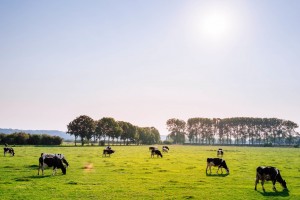
There is no surefire equation to use in determining whether to shelter your animals in a barn or leave them out to pasture, but here are a few considerations. Consider the types of trees growing on your farm land. If there are certain types of trees that can easily uproot, then the pasture may not be safe in the case of severe weather, such as tornadoes. The same is true if there are overhead power lines, barbed wire fencing and other debris that can easily be blown around. Perhaps the most important consideration is the size of your pasture. If it is less than one acre, your livestock may not have sufficient space to avoid blowing debris.
How to plan for and prevent a barn fire
Barn fires, one of the most common disasters to hit farms, can be caused by many different sources, including severe weather. Barn fires can result in significant damage, including damage to supplies, equipment, livestock and the building itself. If the fire is not quickly contained, damage to surrounding buildings and other farm assets could result as well.
Certainly, being able to prevent a barn fire is the preferred method. However, barn fires are often caused by lightning strikes during severe weather like we recently saw in the Kansas City area. If you have a barn, it is important to understand how barn fires usually start and know how to handle them.
One of the greatest things you can do to protect your farm and your livestock from a potential disaster is to periodically evaluate and modify your disaster plan, supplies, and information, as necessary. Join us for a FREE workshop today! If you have questions regarding small business or farm planning, or any other estate planning matters, contact Gaughan & Connealy for a consultation either online or by calling us at (913) 262-2000.

- Hulk Hogan and Disclaimers…? - September 1, 2025
- “Let’s Go Crazy” … Over Prince’s Estate - September 1, 2025
- Who Should Act as Your Trustee? - July 20, 2020
